Patent application: A device and method for amperometric sensing

M. Zevenbergen, Y. Abbas, J. Oudenhoven, K. Mathwig, European Patent Application EP4647751A1. [link, pdf]
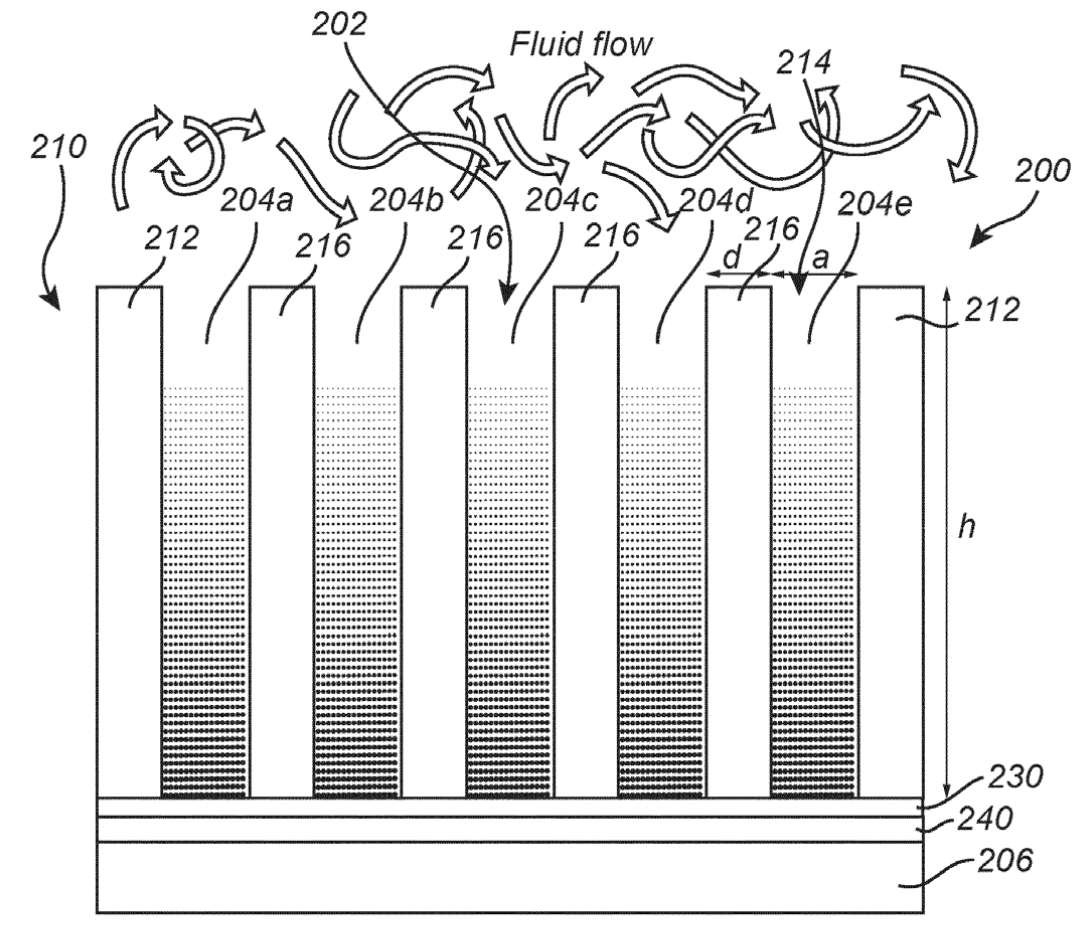
A device for amperometric sensing comprises: an enclosing structure defining a sensing volume and comprising at least one circumferential wall, wherein the enclosing structure defines an inlet in or at an end of the circumferential wall for allowing a target analyte to enter the sensing volume, an electrode arranged in the sensing volume and displaced from the inlet; and a read-out circuitry connected to the electrode and configured for read-out of an electrical signal from the electrode within a time frame during which a target analyte depletion layer around the electrode expands along the circumferential wall and is substantially contained within the sensing volume, wherein the electrical signal is
representative of a concentration of the target analyte.
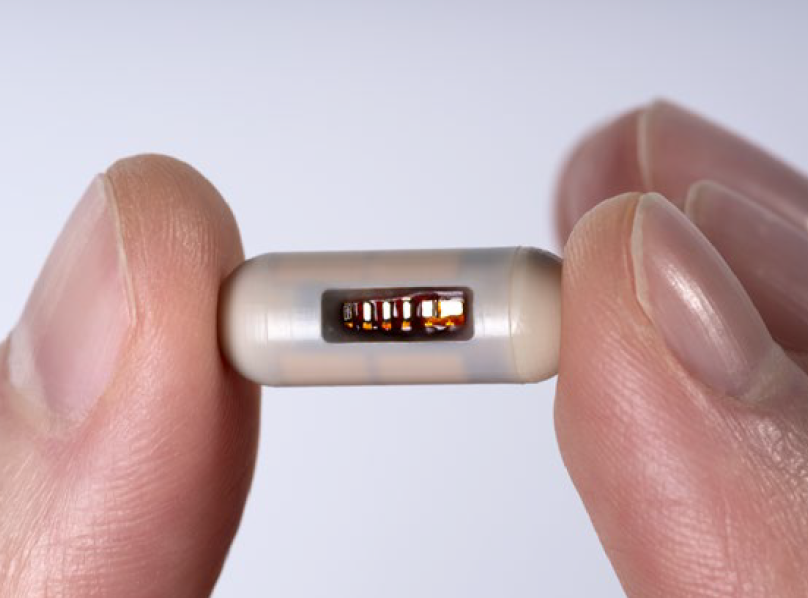
Publication: Measurements of redox balance along the gut using a miniaturized ingestible sensor

A. Even, R. Minderhoud, T. Torfs, F. Leonardi, A. van Heusden, R. Sijabat, D. Firfilionis, I. D. Castro Miller, R. Rammouz, T. Teichmann, R. van Bergen, G. Vermeeren, E. Capuano, R. Armstrong, K. Mathwig, S. de Vries, A. Goris, N. Van Helleputte, G. Hooiveld and C. Van Hoof.  Nature Electronics (2025), published online. [link, pdf]

Redox balance—the equilibrium between oxidants and reductants—is a key modulator of a healthy gut and consequently overall well-being. Excess reactive species, resulting in oxidative stress, are linked to deleterious processes including inflammation and microbiome dysbiosis. However, a lack of suitable in vivo methods has restricted measurements of redox balance in the human gut. Here we report a miniaturized ingestible sensor that is equipped with an oxidation–reduction potential sensor, an electrochemical reference electrode and pH and temperature sensors. We preclinically validate our wireless gastrointestinal (GI) smart module (GISMO) in GI fluids and an animal model and report in-human measurements in 15 healthy individuals. Our high-temporal-resolution data, measured every 20 s, reveal consistent profiles from an oxidative environment in the stomach to a strongly reducing environment in the large intestine. This non-intrusive method has the potential to advance (GI) disease monitoring and offer insights into the gut microbiome.

Patent application: A device for electrodialysis and a method for electrodialysis

K. Mathwig, M. Zevenbergen, A. R. M. Verschueren, European Patent Application EP4574246A1, US Patent Application US20250205648A1. [link, pdf]

According to an aspect of the present inventive concept there is provided a device for electrodialysis, comprising: a channel configured for receiving a flow of an electrolyte; a first electrode and a second electrode, wherein the first and second electrode are electrically connected for applying an alternating current voltage; a first ion flow controlling element being configured to allow flow of ions from a second side to a first side, the first ion flow controlling element comprising a first substrate and a first ion-exchange membrane, wherein the first substrate comprises pores; a second ion flow controlling element being configured to allow flow of ions from a second side to the a side, the second ion flow controlling element comprising a second substrate and a second ion-exchange membrane, wherein the second substrate comprises pores.

Publication: Suppressing parasitic flow in membraneless diffusion-based microfluidic gradient generators

V. Khandan, R. C. Chiechi, E. Verpoorte, K. Mathwig, Lab on a Chip 25 (2025) 1875. [link, pdf]

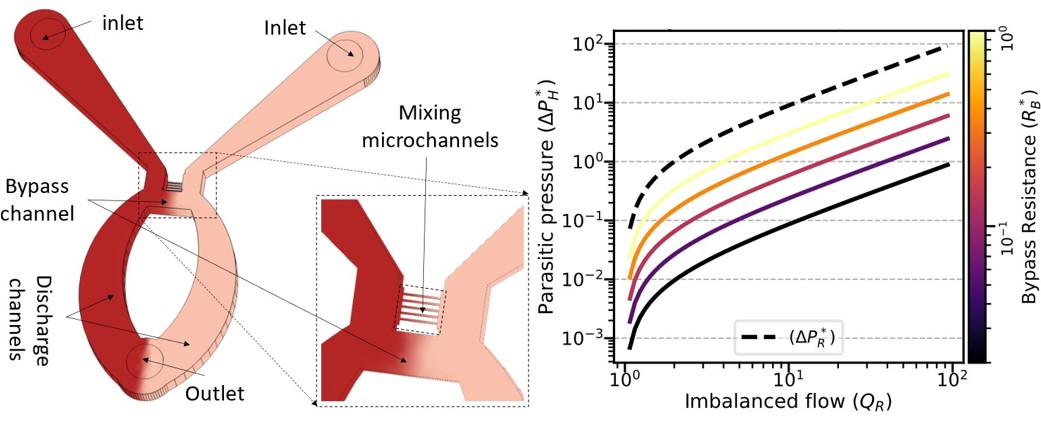
Diffusion-based microfluidic gradient generators (DMGGs) are essential for various in vitro studies due to their ability to provide a convection-free concentration gradient. However, these systems, often referred to as membrane-based DMGGs, exhibit delayed gradient formation due to the incorporated flow-resistant membrane. This limitation substantially hinders their application in dynamic and time-sensitive studies. Here, we accelerate the gradient response in DMGGs by removing the membrane and implementing new geometrical configurations to compensate for the membrane’s role in suppressing parasitic flows. We introduce these novel configurations into two microfluidic designs: the H-junction and the Y-junction. In the H-junction design, parasitic flow is redirected through a bypass channel following the gradient region. The Y-junction design features a shared discharge channel that allows converging discharge flow streams, preventing the buildup of parasitic pressure downstream of the gradient region. Using hydraulic circuit analysis and fluid dynamics simulations, we demonstrate the effectiveness of the H-junction and Y-junction designs in suppressing parasitic pressure flows. These computational results, supported by experimental data from particle image velocimetry, confirm the capability of our designs to generate a highly stable, accurate, and convection-free gradient with rapid formation. These advantages make the H-junction and Y-junction designs ideal experimental platforms for a wide range of in vitro studies, including drug testing, cell chemotaxis, and stem cell differentiation.

Publication: Hydrolytic, Thermal, and Electrochemical Stability of Thiol- and Terminal Alkyne-Based Monolayers on Gold: A Comparative Study

Z. Yang, S. P. Pujari, R. Armstrong, K. Mathwig, F. P. J. T. Rutjes, M. M. J. Smulders, Han Zuilhof, Langmuir 41 (2025) 6197. [link, pdf].

The terminal alkyne–Au interaction is emerging as a promising adsorbing bonding motif for organic monolayers, allowing it to be used for installing antifouling layers and/or recognition elements on gold surfaces for biosensing applications. In contrast to the well-known thiol-on-gold monolayers, the long-term hydrolytic, thermal, and electrochemical stability of the alkyne–Au bond remains relatively unexplored. Insight into these is, however, essential to deliver on the promise of the alkyne–Au bond for (bio)sensing applications, and to see under which conditions they might replace thiolate–gold bonds, if the latter are insufficiently stable due to, e.g., biological thiol exchange. Therefore, these stabilities were investigated for monolayers on Au substrates formed from 1-octadecanethiol and 1-octadecyne. Additionally, monodentate and tridentate alkyne-based adsorbates were designed to investigate the effect of multivalency on the stability. The hydrolytic stability over time in four aqueous media and the thermal stability in air were evaluated using static water contact angle measurements and X-ray photoelectron spectroscopy. Electrochemical oxidative desorption potentials were also assessed by cyclic voltammetry. All three tests indicate that the monovalent terminal alkyne monolayers on gold are slightly less stable than their thiolate analogs, which we could attribute to a lower packing density but still sufficiently stable to be applied in biosensing in the gut, while multivalency can further improve this. Our work provides insight into the stability of terminal alkynes under different conditions, better enabling the use of terminal alkyne–Au interactions in biosensors.

Publication: AI-Driven Simulation of Stochastic Electrochemiluminescence

K. Mathwig, ACS Electrochemistry 1 (2025) 280. [link, pdf].

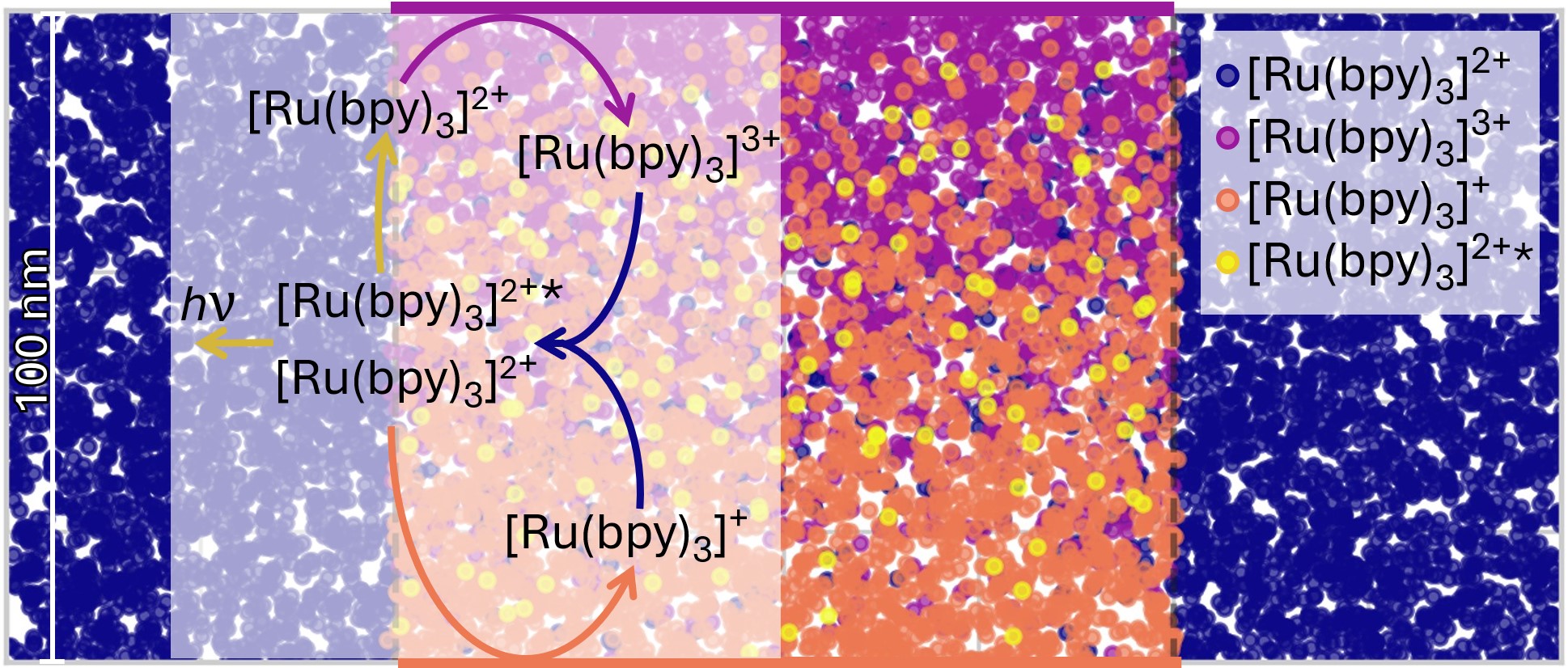
Electrochemiluminescence (ECL) is a vital analytical technique widely used in immunosensing and emerging applications in biological imaging. Traditional ECL simulations rely on finite element methods, which provide valuable insights into reaction dynamics and spatial distribution of species. However, such methods are limited in mesoscopic environments where stochastic effects become significant. Here, I present a novel approach using ChatGPT o1 to generate a Python-based stochastic simulation for ECL reactions in a nanofluidic channel, incorporating diffusion, electrochemical and chemical reactions, and photon emission. The simulation successfully replicates results from finite element models while offering additional insights into time-dependent behaviors and enabling noise analysis for simulated luminescence traces. The iterative development of this simulation using ChatGPT was rapid, requiring minimal coding expertise while leveraging the model’s “reasoning” capabilities to implement physical principles, verify calculations, and optimize performance. This work demonstrates that large language models (LLMs) can serve as effective co-intelligence tools, facilitating the development of complex simulations in electrochemistry. AI-driven tools/LLMs have a promising role in advancing electrochemistry research, though careful validation remains essential to ensure scientific accuracy.

Patent application: A device and a method for analyzing a characteristic of an analyte in a test liquid

R. Armstrong, J. Elias, K. Mathwig, M. Zevenbergen, European Patent Application EP4473905A1, United States Patent Application 20240407666A1. [link, pdf]

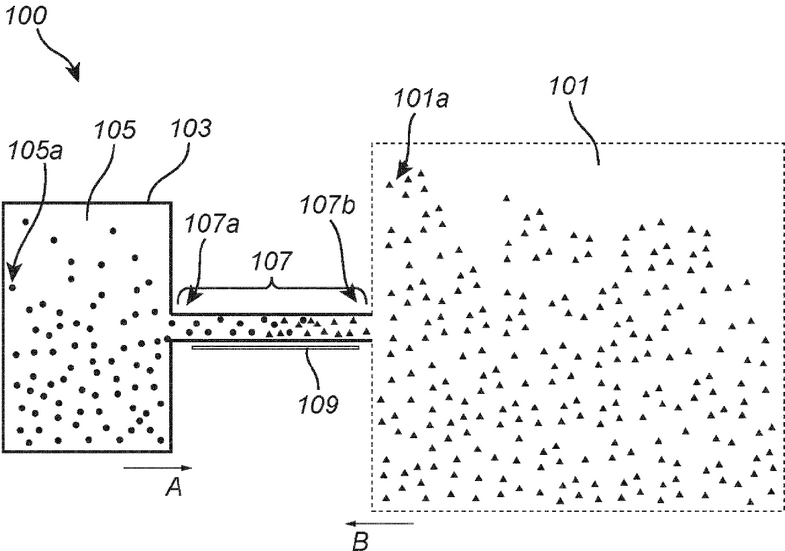
According to an aspect of the present inventive concept there is provided a device for analyzing a characteristic of an analyte in a test liquid, the device comprising: a reservoir configured to hold an analysis liquid, the analysis liquid comprising an analysis compound; a microfluidic channel having a first end and a second end, wherein the first end is arranged in fluid communication with the reservoir, wherein the second end is configured to be in fluid communication with the test liquid; wherein the microfluidic channel is configured to allow mixing, by diffusion, of the analysis compound entering the first end with the analyte entering the microfluidic channel from the second end; and a detector arranged in relation to the microfluidic channel, wherein the detector is configured to detect a property dependent on the mixing of the analysis compound and the analyte, said property being representative of the characteristic of the analyte in the test liquid.

Preprint: AI-driven simulation of stochastic electrochemiluminescence

K. Mathwig. ChemRxiv. 2024. doi:10.26434/chemrxiv-2024-hhnzs [pdf]

→ published in ACS Electrochem. (2024) DOI: 10.1021/acselectrochem.4c00166

Electrochemiluminescence (ECL) is a vital analytical technique widely used in immunosensing and emerging applica-tions in biological imaging. Traditional ECL simulations rely on finite element methods, which provide valuable insights into reaction dynamics and spatial distribution of species. However, such methods are limited in mesoscopic environ-ments where stochastic effects become significant. Here, I present a novel approach using ChatGPTo1 to generate a Py-thon-based stochastic simulation for ECL reactions in a nanofluidic channel, incorporating diffusion, electrochemical and chemical reactions, and photon emission. The simulation successfully replicates results from finite element models while offering additional insights into time-dependent behaviors and enabling noise analysis for simulated luminescence traces. The iterative development of this simulation using ChatGPT was rapid, requiring minimal coding expertise while leveraging the model’s “reasoning” capabilities to implement physical principles, verify calculations, and optimize per-formance. This work demonstrates that large language models (LLMs) can serve as effective co-intelligence tools, facili-tating the development of complex simulations in electrochemistry. AI-driven tools/LLMs have a promising role in ad-vancing electrochemistry research, though careful validation remains essential to ensure scientific accuracy.

Preprint: Suppressing parasitic flow in membraneless diffusion-based microfluidic gradient generators

V. Khandan, R. C. Chiechi, E. Verpoorte, K. Mathwig, arXiv:2411.02953 [physics.flu-dyn], 2024. [link, pdf]

→ published in Lab on a Chip (2025) DOI: 10.1039/D4LC00956H

Diffusion-based microfluidic gradient generators (DMGGs) are essential for various in-vitro studies due to their ability to provide a convection-free concentration gradient. However, these systems, often referred to as membrane-based DMGGs, exhibit delayed gradient formation due to the incorporated flow-resistant membrane. This limitation substantially hinders their application in dynamic and time-sensitive studies. Here, we accelerate the gradient response in DMGGs by removing the membrane and implementing new geometrical configurations to compensate for the membrane’s role in suppressing parasitic flows. We introduce these novel configurations into two microfluidic designs: the H-junction and the Y-junction. In the H-junction design, parasitic flow is redirected through a bypass channel following the gradient region. The Y-junction design features a shared discharge channel that allows converging discharge flow streams, preventing the buildup of parasitic pressure downstream of the gradient region. Using hydraulic circuit analysis and fluid dynamics simulations, we demonstrate the effectiveness of the H-junction and Y-junction designs in suppressing parasitic pressure flows. These computational results, supported by experimental data from particle image velocimetry, confirm the capability of our designs to generate a highly stable, accurate, and convection-free gradient with rapid formation. These advantages make the H-junction and Y-junction designs ideal experimental platforms for a wide range of in-vitro studies, including drug testing, cell chemotaxis, and stem cell differentiation.

Preprint: AI-driven random walk simulations of viscophoresis and visco-diffusiophoretic particle trapping

K. Mathwig, arXiv:2410.11481 [physics.flu-dyn], 2024. [link, pdf]

Viscophoresis refers to the transport of suspended nanoparticles driven by a steep viscosity gradient of. This work investigates this new transport effect using a random walk simulation. By modelling position-dependent Brownian motion, viscophoresis, and diffusiophoresis in a one-dimensional geometry, the simulates yields results that align well with experimental data, demonstrating viscophoresis as a new phoretic transport mechanism. Additionally, the simulation predicts the efficient separation of nanoparticles based on size, suggesting potential applications for sorting in microfluidic systems. The Python script for the simulation was generated using ChatGPT o1, significantly accelerating model development and providing accurate physical insights and efficient equations. However, caution is advised, as ChatGPT may generate non-physical results; iterative testing and validation is important.