W. El Majdoub, F. Petrini, E. Te Lindert-Blommert, K. Mathwig, A. H. Velders, G. Valenti, V. Saggiomo. ChemRxiv. 2026. doi: 10.26434/chemrxiv.15000686/v1 [pdf]
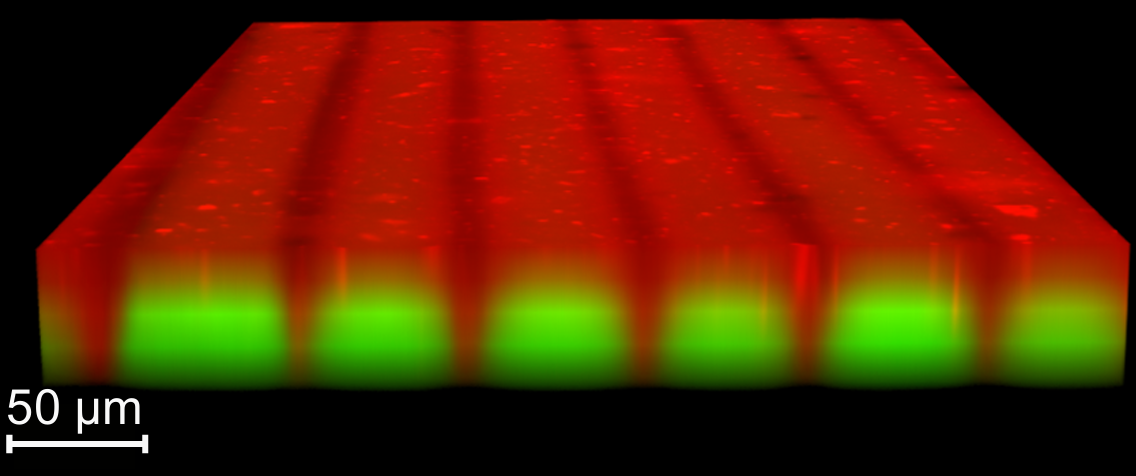
In surface-based biosensors, an optimal microchannel geometry combines a large surface area in the XY plane with a reduced channel height along the Z-axis. However, fabricating microchannels with heights below 25 µm and/or incorporating micropillars remains challenging using low-cost, accessible methods. Here, we propose a simple and rapid fabrication method that exploits the intrinsic surface topography generated by fused deposition modelling (FDM) 3D printing. This layer-by-layer fabrication process inherently produces surface features that were exploited to form microchannels. The substrates were characterized to determine the dimensions and geometries using scanning electron microscopy (SEM), fluorescence microscopy, confocal microscopy, and 3D reconstructions. The results showed that surface features from the 3D-printed molds were successfully transferred into polydimethylsiloxane (PDMS). When pressed to glass, the PDMS replicas form adjacent microchannels as small as 15 µm in height that provide a shallow and extensive sensing area. Flow tests confirmed the integrity of the channels and demonstrated that they could be sealed without plasma bonding. This approach demonstrates a significant advancement in the fabrication of sub-20 µm microchannels and in the development of alternatives to traditional micropillars, with high-resolution results achieved using standard, low-cost FDM printing.
 Klaus Mathwig