K. Mathwig, arXiv:2410.11481 [physics.flu-dyn], 2024. [link, pdf]
Viscophoresis refers to the transport of suspended nanoparticles driven by a steep viscosity gradient of. This work investigates this new transport effect using a random walk simulation. By modelling position-dependent Brownian motion, viscophoresis, and diffusiophoresis in a one-dimensional geometry, the simulates yields results that align well with experimental data, demonstrating viscophoresis as a new phoretic transport mechanism. Additionally, the simulation predicts the efficient separation of nanoparticles based on size, suggesting potential applications for sorting in microfluidic systems. The Python script for the simulation was generated using ChatGPT o1, significantly accelerating model development and providing accurate physical insights and efficient equations. However, caution is advised, as ChatGPT may generate non-physical results; iterative testing and validation is important.
C. Sharma, S. E. C. Dale, K. Mathwig, M. A. G. Zevenbergen, Z. Li., Bhuvanesh E., K. Parida, Y. S. Negi, F. Marken, ChemElectroChem (2024), e202400411. [link, pdf]
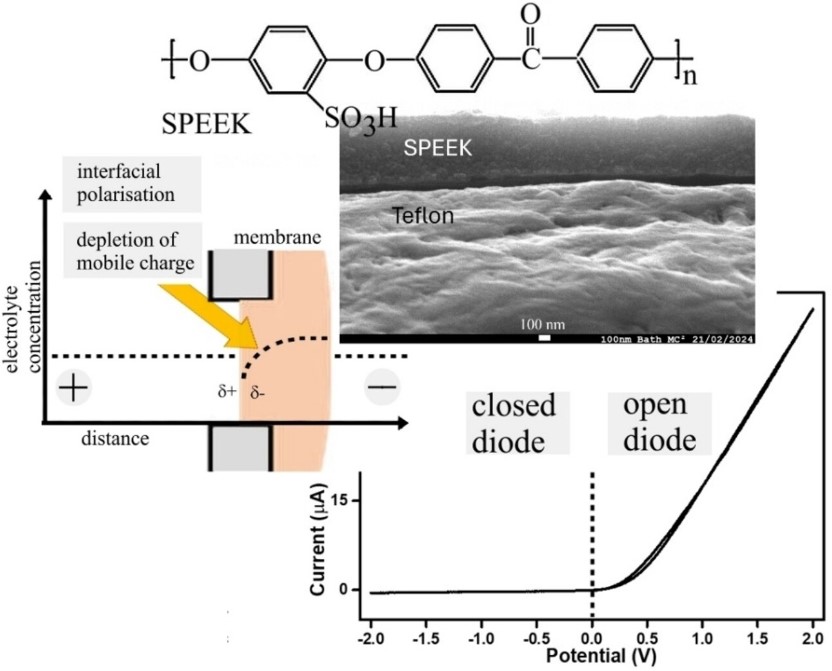
Sulfonated poly(oxy-1,4-phenylene-oxy-1,4-phenylenecarbonyl-1,4-phenylene) also known as SPEEK is a chemically robust cation conductor with good solution processability. A thin film (approx. 0.7 μm) coated asymmetrically over a 10 μm diameter microhole in a Teflon substrate film (5 μm thickness) produces ionic diode effects in aqueous electrolyte media even at high ionic strengths up to 2 M NaCl. The enhancement in the ionic diode performance under high salt conditions is tentatively attributed to a (partial) switch from a concentration polarisation effect (dominant for high diode currents) to interfacial polarisation (dominant at low current; proposed for molecularly rigid ionomers). Ionic strength effects on the diode performance seem relatively low further indicative of a mechanism for the diode effect caused by interfacial polarisation without significant concentration polarisation. Preliminary comparison of diode phenomena in aqueous HCl, LiCl, NaCl, and MgCl2 reveals cation specific effects due to interaction with the polymer.
V. Khandan, V. J.P. Boerkamp, R. C. Chiechi, J. Hohlbein, K. Mathwig, Biophysical Journal 124 (2025) 3342. [link, pdf]
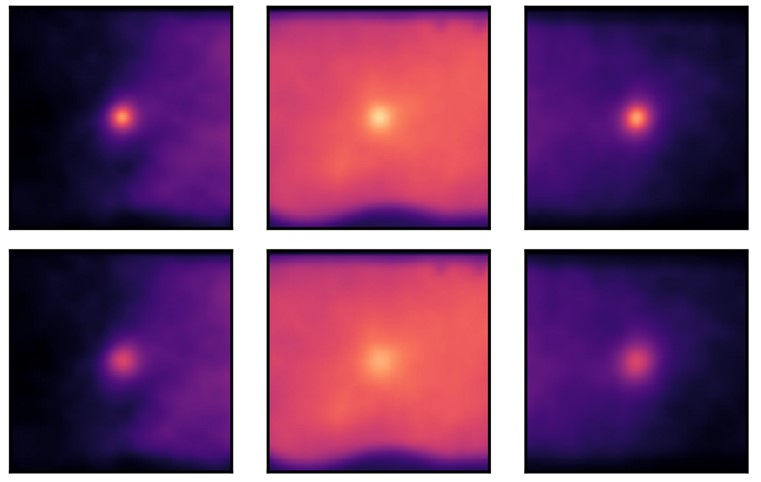
Fluorescence Correlation Spectroscopy (FCS) is a cornerstone technique in optical microscopy to measure, for example, the concentration and diffusivity of fluorescent emitters and biomolecules in solution. The application of FCS to complex biological systems, however, is fraught with inherent intricacies that impair the interpretation of correlation patterns. Critical among these intricacies are temporal variations beyond diffusion in the quantity, intensity, and spatial distribution of fluorescent emitters. These variations introduce distortions into correlated intensity data, thus compromising the accuracy and reproducibility of the analysis. This issue is accentuated in imaging-based approaches such a Pair Correlation Function (pCF) analysis due to their broader Regions of Interest (ROIs) compared to point-detector-based approaches. Despite ongoing developments in FCS, attention to systems characterized by a spatiotemporal-dependent probability distribution function (ST-PDF) has been lacking. To address this knowledge gap, we developed a new analytical framework for ST-PDF systems that introduces a dual-timescale model function within the conventional pCF analysis. Our approach selectively differentiates the signals associated with rapid processes, such as particle diffusion, from signals stemming from spatiotemporal variations in the distribution of fluorescent emitters occurring at extended delay timescales. To corroborate our approach, we conducted proof-of-concept experiments on an ST-PDF system, wherein the, initially, uniform distribution of fluorescent microspheres within a microfluidic channel changes into a localized accumulation of microspheres over time. Our framework is offering a comprehensive solution for investigating various phenomena such as biomolecular binding, sedimentation, and particle accumulation.
R. Schoeman, K. Mathwig, European Patent Application EP4282340A1; United States Patent Application US20230380816A1. [link, pdf]
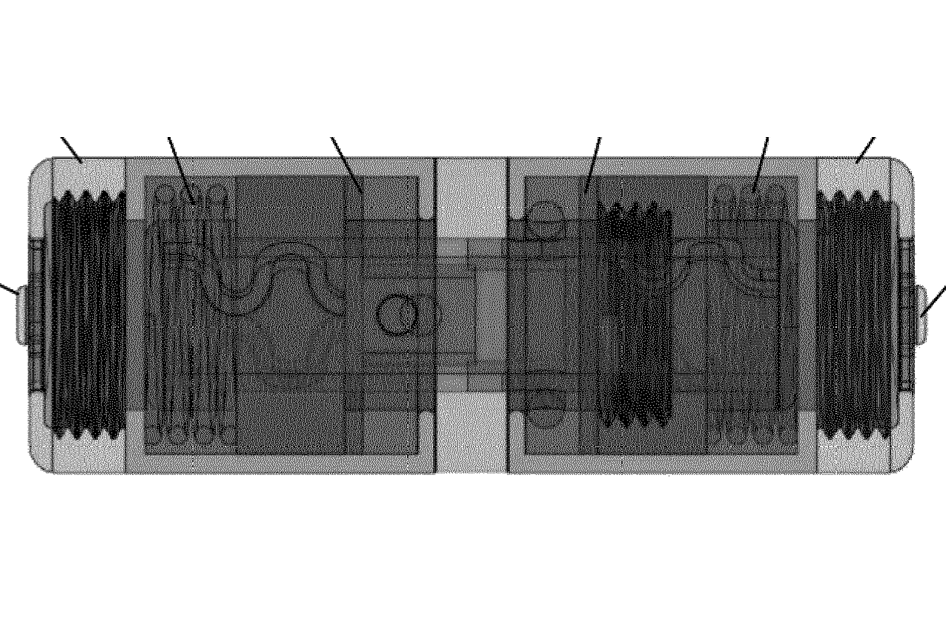
An ingestible device for sampling material at least one time is provided. The ingestible device comprises a first chamber being enlargeable in space, comprising an inlet, and to be filled with the material to be sampled, a second chamber being diminishable in space, comprising an outlet, and a reversible actuating mechanism. In this context, the reversible actuating mechanism is configured such that triggering the reversible actuating mechanism leads to an enlargement of the first chamber to collect the material to be sampled through the inlet and to a diminishment of the second chamber.
F. Leonardi, R. R. Sijabat, R. Minderhoud, A. J. G. Even, K. Mathwig, R. E. Armstrong, S. de Vries, A. Goris, C. van Hoof, Biosensors and Bioelectronics: X15 (2023) 100406. [link, pdf]
The correlation between nutritional habits and gut health directly impacts the gut-brain axis via a complex and not yet fully disclosed communication network. Establishing a link between our food intake and specific physiological responses as well as a better knowledge of diseases and the gut microbiota involves solving a challenging puzzle of biochemical pathways. Our understanding is limited by the inaccessibility of the gastrointestinal region to routine non-invasive chemical analysis. Here, we move a step further toward the direct assessment of a protein fermentation product, i.e., ammonium ions, via ion selective electrodes (ISEs) in gastrointestinal digesta samples. By modulating the digestible protein content of the diet regimes of two groups of pigs, we discriminate the level of protein fermentation with a straightforward quasi in-vivo detection method which does not require any sample preparation. Our results show more than a 2-fold increase in ammonium ion concentration (from 180 ppm to 400 ppm) in the proximal colon for a diet based on poorly digestible proteins compared with a diet based on easily digestible proteins. Our approach shows good correlation with a standard laboratory technique for the determination of NH4+, i.e., the Indophenol Blue Method. Our results show the direct sensing of a protein fermentation product in real matrix and demonstrate the great potential of potentiometric sensors to assess ammonium concentration profile along the gastrointestinal tract for diets varying in protein digestibility and fermentation.
E. B. Carneiro-Neto, Z. Li, E. Pereira, K. Mathwig, P. J. Fletcher, F. Marken, ACS Applied Materials and Interfaces15 (2023) 39905. [link, pdf]
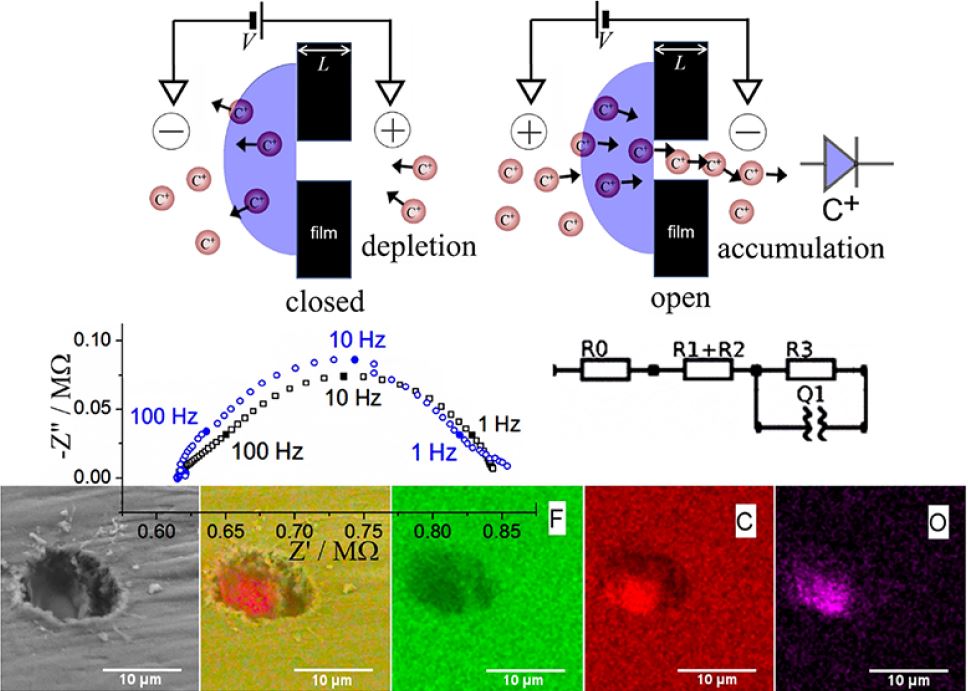
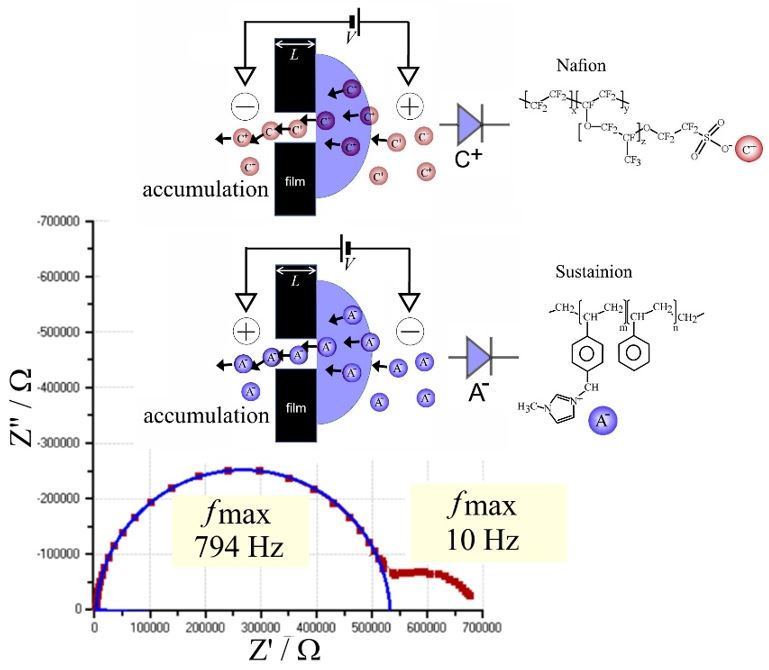
Ionic diode based devices or circuits can be applied, for example, in electroosmotic pumps or in desalination processes. Aquivion ionomer coated asymmetrically over a Teflon film (5 μm thickness) with a laser-drilled microhole (approximately 10 μm diameter) gives a cationic diode with a rectification ratio of typically 10–20 (measured in 0.01 M NaCl with ±0.3 V applied bias). Steady state voltammetry, chronoamperometry, and electrochemical impedance spectroscopy data are employed to characterize the ionic diode performance parameters. Next, a COMSOL 6.0 finite element model is employed to quantitatively assess/compare transient phenomena and to extract mechanistic information by comparison with experimental data. The experimental diode time constant and diode switching process associated with a distorted semicircle (with a typical diode switching frequency of 10 Hz) in the Nyquist plot are reproduced by computer simulation and rationalized in terms of microhole diffusion–migration times. Fundamental understanding and modeling of the ionic diode switching process can be exploited in the rational/optimized design of new improved devices.
Z. Li, K. Mathwig, O. A. Arotiba, L. Tshwenya , E. B. Carneiro-Neto, E. C. Pereira, F. Marken, Curr. Opin. Electrochem.39 (2023) 101280. [link, pdf]
Ionic diodes have emerged repeatedly in the literature for gel interfaces, for nanopores and channels, for nano-/micro-fluidic systems, and for asymmetrically ionomer-covered microholes. Concentration polarisation is likely to be the key to understanding the diode function and the diode time constant τdiode, i.e. the time for approaching steady state following a potential/polarity switch. For frequencies higher than ωdiode = 2πf = (τdiode)-1, the polarization mechanism is too slow for ion current rectification. Below the frequency associated with the diode time constant, irreversibility in ion flow is induced and the diode switches between two resistive states at opposite potentials (“open” and “closed”). The irreversible flow of ions allows energy conversion from electrical to electrochemical. For energy conversion, two coupled ionic diodes are necessary driven by alternating current (AC) electricity to minimise driver electrode electrolysis and energy losses. Opportunities for AC-desalination and for electroosmotic water harvesting with coupled ionic diodes are discussed.
P. de Haan, K. Mathwig, L. Yuan, B. W. Peterson, E. Verpoorte, Organs-on-a-Chip5 (2023) 100026. [link, pdf]
Microperforated membranes are essential components of various organ-on-a-chip (OOC) barrier models developed to study transport of molecular compounds and cells across cell layers in e.g. the intestine and blood-brain barrier. These OOC membranes have two functions: 1) to support growth of cells on one or both sides, and 2) to act as a filter-like barrier to separate adjacent compartments. Thin, microperforated poly(dimethylsiloxane) (PDMS) membranes can be fabricated by micromolding from silicon molds comprising arrays of micropillars for the formation of micropores. However, these molds are made by deep reactive ion etching (DRIE) and are expensive to fabricate. We describe the micromolding of thin PDMS membranes with easier-to-make SU-8 epoxy photoresist molds. With a multilayer, SU-8, pillar microarray mold, massively parallel arrays of micropores can be formed in a thin layer of PDMS, resulting in a flexible barrier membrane that can be easily incorporated and sealed between other layers making up the OOC device. The membranes we describe here have a 30-μm thickness, with 12-μm-diameter circular pores arranged at a 100-μm pitch in a square array. We show application of these membranes in gut-on-a-chip devices, and expect that the reported fabrication strategy will also be suitable for other membrane dimensions.
V. Khandan, V. Boerkamp, A. Jabermoradi, M. Fontana, J. Hohlbein, E. Verpoorte, R. C. Chiechi, K. Mathwig, arXiv:2212.11503 [physics.flu-dyn]. [link, pdf]
Viscosity is a fundamental property of liquids. It determines transport and diffusion of particles in solution. Nonetheless, it is an open question how a gradient of viscosity – causing a gradient in diffusivity – can lead to viscophoretic transport, i.e., directed transport of particles and molecules in solution. Here, we determine viscophoretic drift experimentally. We generate steep, stable viscosity gradients in a microfluidic device and image transport of suspended nanoparticles in these gradients using high-resolution microscopy. We observe high viscophoretic drift velocities which significantly exceed theoretical predictions. In addition, we demonstrate a new method for trapping and concentrating particles by using the interplay of viscophoresis and diffusiophoresis. We believe that a quantification of viscophoresis will advance the understanding and application of transport processes of gradients of viscosity occurring in very diverse fields such as cell biology, chromatography, and membrane technology.
P. A. Goldsteen, A. M. Sabogal Guaqueta, P. P. M. F. A. Mulder, I. S. T. Bos, M. Eggens, L. Van der Koog, J. T. Soeiro, A. J. Halayko, K. Mathwig, L. E. M. Kistemaker, E. M. J. Verpoorte, A. M. Dolga, R. Gosens, Frontiers Pharmacology 13 (2022) 991072, specialty section Respiratory Pharmacology. [link, pdf]
Airway cholinergic nerves play a key role in airway physiology and disease. In asthma and other diseases of the respiratory tract, airway cholinergic neurons undergo plasticity and contribute to airway hyperresponsiveness and mucus secretion. We currently lack human in vitro models for airway cholinergic neurons. Here, we aimed to develop a human in vitro model for peripheral cholinergic neurons using human pluripotent stem cell (hPSC) technology. hPSCs were differentiated towards vagal neural crest precursors and subsequently directed towards functional airway cholinergic neurons using the neurotrophin brain-derived neurotrophic factor (BDNF). Cholinergic neurons were characterized by ChAT and VAChT expression, and responded to chemical stimulation with changes in Ca2+ mobilization. To culture these cells, allowing axonal separation from the neuronal cell bodies, a two-compartment PDMS microfluidic chip was subsequently fabricated. The two compartments were connected via microchannels to enable axonal outgrowth. On-chip cell culture did not compromise phenotypical characteristics of the cells compared to standard culture plates. When the hPSC-derived peripheral cholinergic neurons were cultured in the chip, axonal outgrowth was visible, while the somal bodies of the neurons were confined to their compartment. Neurons formed contacts with airway smooth muscle cells cultured in the axonal compartment. The microfluidic chip developed in this study represents a human in vitro platform to model neuro-effector interactions in the airways that may be used for mechanistic studies into neuroplasticity in asthma and other lung diseases.






 Klaus Mathwig