Journal Article

S. Grimm, J. Martín, G. Rodriguez, M. Fernández-Gutierrez, K. Mathwig, R. B. Wehrspohn, U. Gösele, J. San Roman, C. Mijangos and M. Steinhart
Cellular interactions of biodegradable nanorod arrays prepared by nondestructive extraction from nanoporous alumina
Journal of Material Chemistry 20 (2010) 3171.
[pdf]

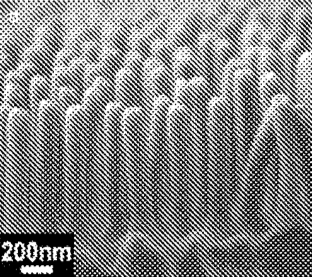
Biodegradable extracellular matrices (ECMs) consisting of mechanically stable arrays of poly(lactide) nanorods (nanorod diameter ≈ 200 nm; lattice constant ≈ 500 nm) with areas up to 9 cm2 were prepared by nondestructive extraction from recyclable self-ordered nanoporous alumina hard templates. Fibroblasts formed dense tissue layers on the heparin/gelatin activated nanorod arrays, showed excellent adhesion and exhibited a highly elongated morphology such as in natural tissue. The synthetic approach reported here combining advantages of top-down lithography (well-defined topography) and self-assembly (low costs, high throughput, feature size in the 100 nm range) may yield ECMs for biomedical applications. Remarkably, on microrod arrays with four times larger feature sizes the fibroblasts were significantly less elongated and their proliferation was strongly reduced.

Thesis

K. Mathwig
Transport von Teilchen in asymmetrisch modulierten Poren
Dissertation, Martin-Luther-Universität Halle-Wittenberg (2009).
[pdf]

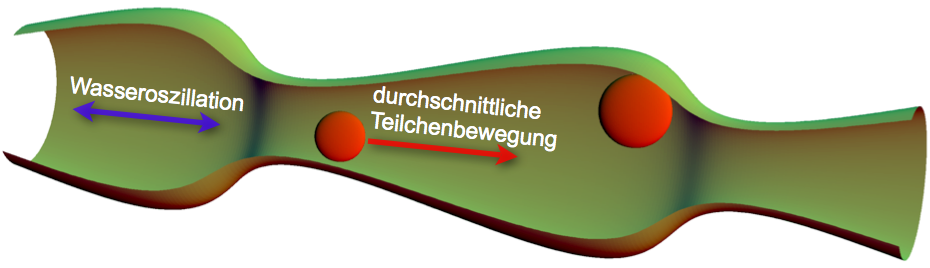
The separation of mesoscopic particles by their size has numerous applications in industry, medicine and biology. Brownian motion plays an important role in the filtration or separation of small particles, but generally leads to an undirected motion or intermixing by diffusion. The present work deals with the microfluidic transport of particles by the drift ratchet effect, which utilizes Brownian motion instead to aid in the separation. In the experiment, suspended particles are microfluidically driven through an array of asymmetrically modulated microchannels fabricated out of macroporous silicon. A new interpretation of the first report on experimental demonstration of the drift ratchet effect (Matthias & Müller Nature 424, 53–57, 2003) is offered: New experiments, which allow to distinguish between particles of different sizes, as well as a reexamination of the original work leads to the conclusion that the measured particle transport does not result from a drift ratchet effect. It is demonstrated that convective mixing instead causes the transport.

Journal Article

R. Hillebrand, S. Grimm, R. Giesa, H.-W. Schmidt, K. Mathwig, U. Gösele and M. Steinhart
Characterization of microrod arrays by image analysis
Applied Physics Letters 94 (2009) 164103.
[pdf]

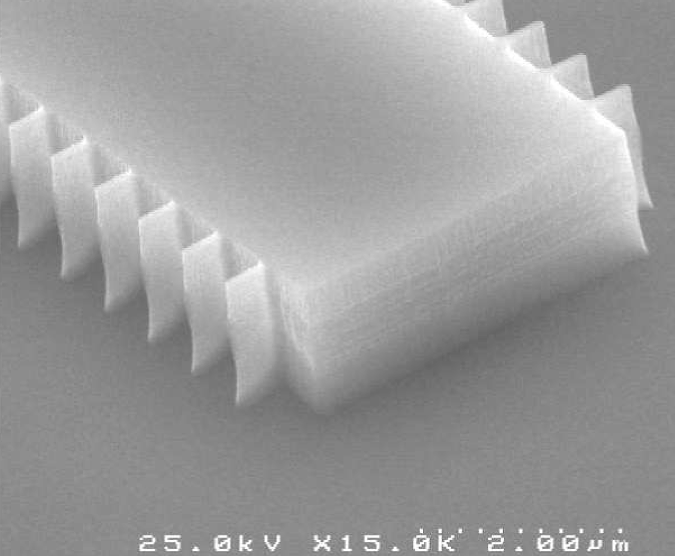
The uniformity of the properties of array elements was evaluated by statistical analysis of microscopic images of array structures, assuming that the brightness of the array elements correlates quantitatively or qualitatively with a microscopically probed quantity. Derivatives and autocorrelation functions of cumulative frequency distributions of the object brightnesses were used to quantify variations in object properties throughout arrays. Thus, different specimens, the same specimen at different stages of its fabrication or use, and different imaging conditions can be compared systematically. As an example, we analyzed scanning electron micrographs of microrod arrays and calculated the percentage of broken microrods.

Conference Proceedings

R. Hillebrand, S. Grimm, R. Giesa, H.-W. Schmidt, K. Mathwig, U. Gösele and M. Steinhart
Polymer microrod arrays prepared by non-destructive molding evaluated by real space image analysis
Polymer Preprints 50 (2009) 365.
[pdf]

Ensembles of aligned polymer nanorpds and microrods are promising materials for self-cleaning surfaces, bioinspired adhesive structures, tissue engineering or sensor arrays. We demonstrare the nondestructive mechanical extraction of arrays of crosslinked polyacrylate nanorods and microrods from thus recyclabe nanoporous anodic aluminum oxide and macroporous silicon templates without necking yielding or cohering. Furthermore, we have developed procedures based on real space image analysis of scanning probe microscopy images of arrays thus released to determine the number of fractured rods and to quantify the uniformity of the array properties.

Journal Article

K. Mathwig, W. Kaiser, A. Somers, J. P. Reithmaier, A. Forchel, K. Ohira, S. M. Ullah and S. Arai
DFB Lasers With Deeply Etched Vertical Grating Based on InAs–InP Quantum-Dash Structures
IEEE Photonics Technology Letters 19 (2007) 264.
[pdf]

Distributed feedback lasers with first-order vertical grating based on AlInGaAs-InAs-InP quantum-dash lasers were fabricated by electron beam lithography and Cl2-Ar reactive ion etching with an electron cyclotron resonance source. Low threshold currents and single-mode operation with sidemode suppression ratios of 48 dB and a direct modulation bandwidth of 5.5 GHz were demonstrated.

Thesis

K. Mathwig
Monomodige InP-basierende Quantenpunktlaser: Herstellung, statische und dynamische Eigenschaften
Diplomarbeit, Universität Würzburg (2005).
[pdf]

Ziel dieser Arbeit war die Herstellung von InP-Quantendash-DFB-Lasern mit einer Wellenläge um 1,55 μm für Telekommunikationsanwendungen. Der Schwerpunkt der Diplomarbeit lag in der Entwicklung von auf die speziellen Materialeigenschaften von Quantendash-Laserstrukturen abgestimmten Trockenätzprozessen für die laterale Nanostrukturierung. Damit wurden monomodig emittierende Laserbauelemente hergestellt, und deren spezielle Eigenschaften wurden charakterisiert.

Conference Proceedings

W. Kaiser, K. Mathwig, S. Deubert, A. Somers, A. Forchel, J.P. Reithmaier, O. Parillaud, M. Krakowski, D. Hadass, V. Mikhelashvili, G. Eisenstein and M. Legge
Laterally Coupled DFB Lasers Based on InAs/lnP-QDash Structures for
Broadband Applications
31st European Conference on Optical Communications (ECOC) 3 (2005) 559.
[pdf]

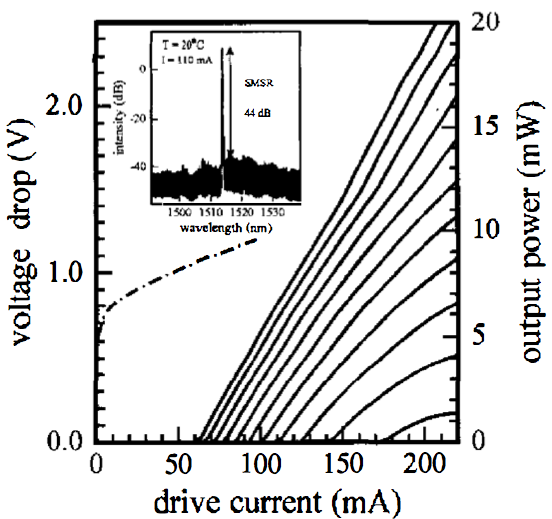
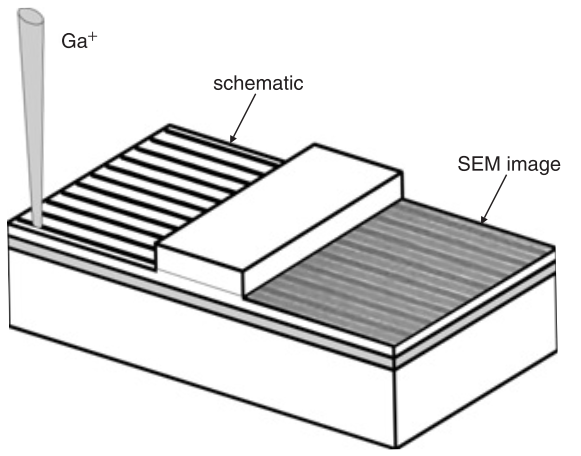
Laterally coupled DFB lasers based on quantum dashes were fabricated by FIB lithography. CW­ powers above 30 mW, high SMSRs, a modulation bandwidth of 7.6 GHz and singlemode emission from 1.5 to 1.9 µm were demonstrated.

Journal Article

W. Kaiser, K. Mathwig, S. Deubert, J. P. Reithmaier, A. Forchel, O. Parillaud, M. Krakowski, D. Hadass, V. Mikhelashvili and G. Eisenstein
Static and dynamic properties of laterally coupled DFB lasers based on InAs/InP QDash structures
Electronic Letters 41 (2005) 808.
[pdf]

Laterally coupled, complex distributed feedback lasers based on AlInGaAs/InAs/InP quantum dash layers were fabricated by maskless focused ion beam lithography. Continuous-wave powers above 30 mW at room temperature, sidemode suppression ratios of 44 dB and a modulation bandwidth of 7.6 GHz were demonstrated.